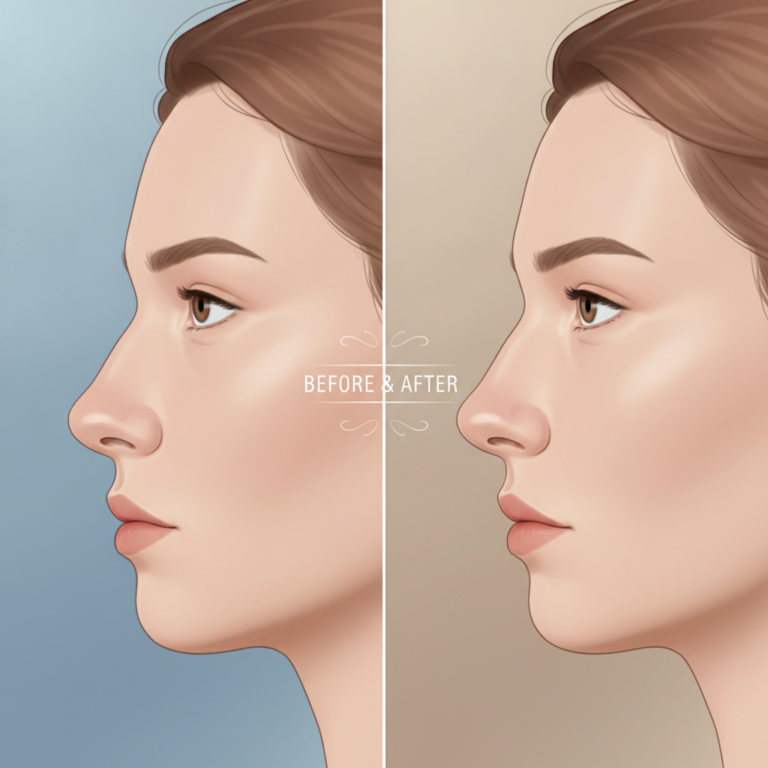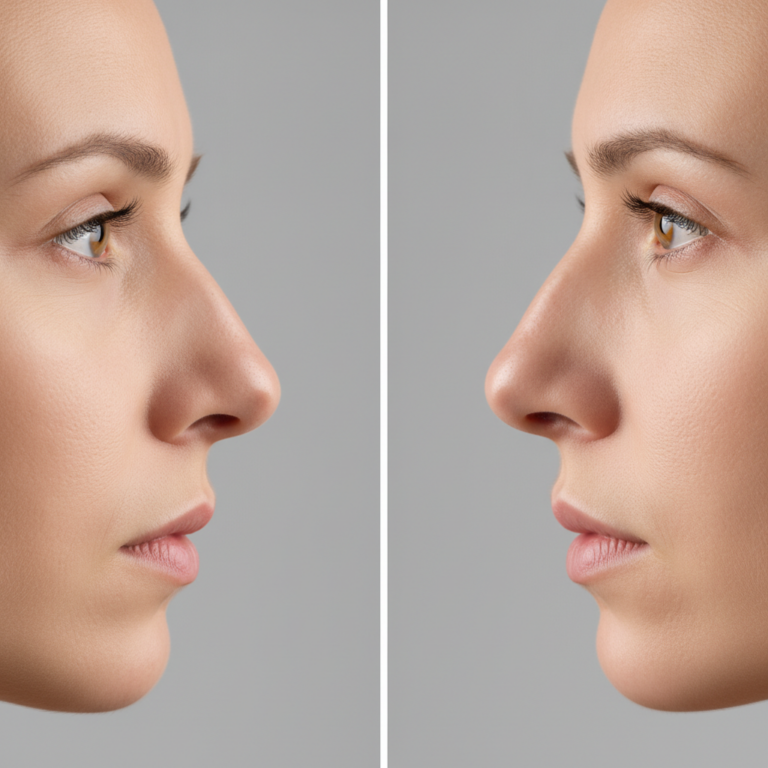

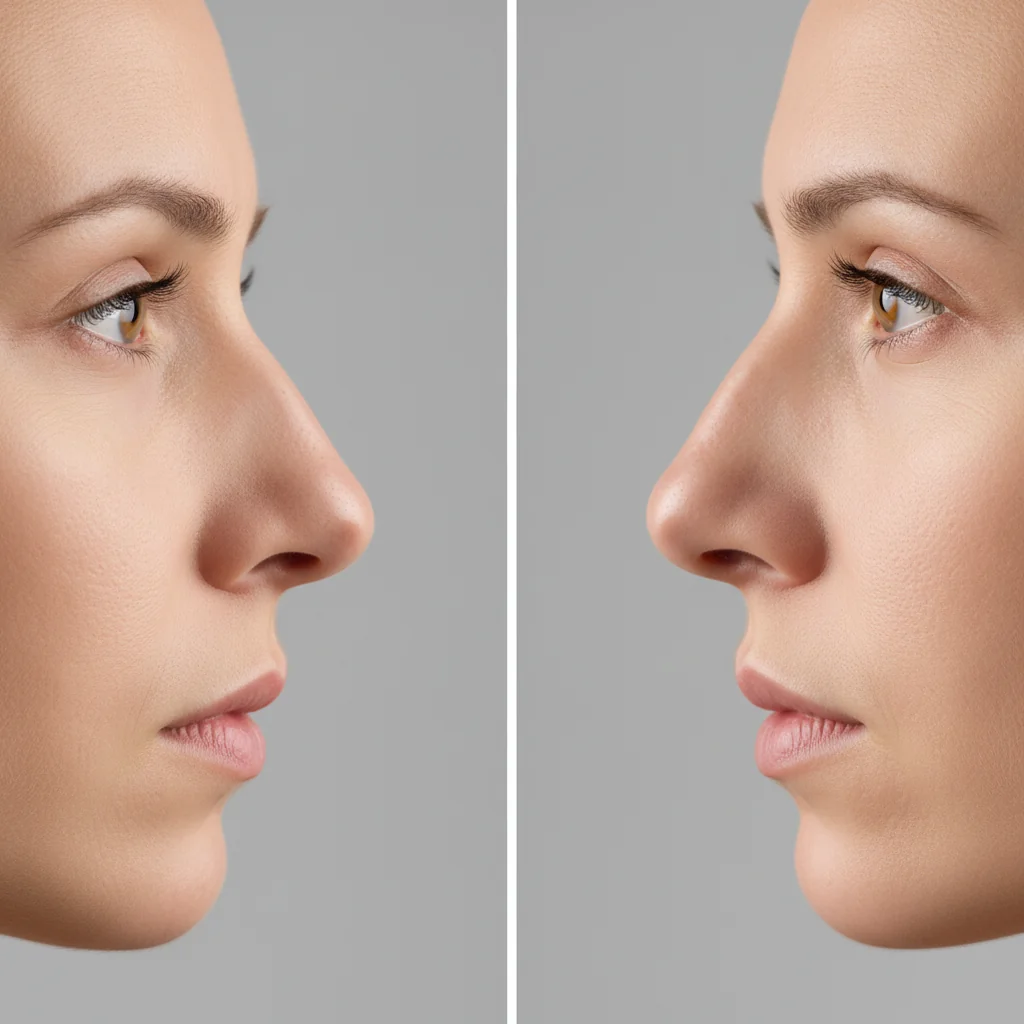
Yes, a nose job changes your face because the nose sits at the center of it. But changing your nose is not the same as changing who you look like. Good rhinoplasty should create refinement, not transformation.
That distinction matters. People considering rhinoplasty frequently worry that they’ll look in the mirror after surgery and see someone unfamiliar. It’s also why questions like “Will a nose job change my whole face?” and “Will I still look like myself after rhinoplasty?” regularly appear in online forums such as Reddit.
Patients deserve a straightforward answer. Your nose influences facial balance, so changing it can change the overall impression of your face. But rhinoplasty does not physically alter most of the features surrounding it.
What Does Rhinoplasty Actually Change?
Rhinoplasty reshapes specific structures of the nose. Exactly what moves depend on your anatomy and goals, but most cosmetic changes involve three primary areas: the bridge, tip, and nostrils.
The Bridge
The bridge determines much of the nose’s profile and how prominent it appears from different angles.
For example, someone with a noticeable dorsal hump may feel that their nose dominates their side profile. Rhinoplasty can reduce or reshape that hump to create a smoother transition from the forehead toward the nasal tip.
The objective doesn’t necessarily have to be a tiny or perfectly straight nose. As we’ve discussed in our guide to dorsal hump rhinoplasty, the goal is often refinement rather than transformation, creating a nose that fits the face so naturally that it looks like you could have been born with it.
The Tip
The nasal tip can be refined when it appears wide, bulbous, droopy, overly projected, or disproportionate to the bridge.
Imagine someone whose bridge already suits their face but whose nasal tip projects farther forward than they would like. Adjusting the tip can change the profile and improve facial balance without dramatically changing the rest of the nose.
Small adjustments here can have a surprisingly noticeable effect because the tip helps define the overall shape of the nose.
Nostril Width
For certain patients, rhinoplasty may also alter the width or shape of the nostrils or nasal base.
If the nostrils flare noticeably or the base appears disproportionately wide compared with the rest of the nose, carefully planned adjustments can create better proportions.
Again, this isn’t about making every nose narrow. It’s about determining whether the nasal base is harmonious with the patient’s other features.
What Doesn’t a Nose Job Change?
This is where many online explanations become confusing.
Because rhinoplasty can make the entire face appear more balanced, patients sometimes assume that other facial features have physically changed.
They haven’t.
Rhinoplasty does not surgically reposition your:
- Eyes
- Cheekbones
- Jawline
- Chin
- Lips
It also doesn’t fundamentally change the way you smile.
Your eyes can sometimes appear more noticeable after rhinoplasty because attention is no longer being drawn as strongly toward the nose. Your cheekbones may seem more prominent for the same reason. Your profile can appear more balanced even though your chin and jaw haven’t moved at all.
That is a visual effect of changing facial proportions, not evidence that rhinoplasty somehow changes the rest of your facial anatomy.
Why Can One Feature Make Your Whole Face Look Different?
The nose occupies a unique position: it sits almost directly in the center of the face.
Imagine a patient with a prominent dorsal hump. From the profile, the eye may naturally be drawn toward the projection of the nose. Reduce that prominence appropriately, and suddenly the eye may travel more easily across the entire profile.
The forehead didn’t change. The lips didn’t change. The chin didn’t change. Their relationship to the nose did.
The same principle applies from the front. Refining an overly broad nasal tip, for example, may create the perception of greater symmetry or make the eyes appear more prominent.
This is why even relatively small rhinoplasty adjustments can make a meaningful difference without making someone look like a different person.
How Much Can Rhinoplasty Realistically Change Your Appearance?
The answer depends heavily on where you’re starting and what you want changed.
A patient seeking a subtle dorsal hump reduction may notice a significant improvement primarily from the side. Friends who don’t know about the surgery might simply think something looks different or more balanced.
Someone having the bridge, tip, and nostril width addressed simultaneously may see a more noticeable change from multiple angles.
But there are limits.
Rhinoplasty is constrained by your existing anatomy, including your nasal bones, cartilage, skin thickness, airway, and surrounding facial proportions. A responsible surgical plan works with those features rather than attempting to impose an entirely unrelated nose onto your face.
This is also why bringing a celebrity photo into a consultation has limited usefulness. It can communicate what you like aesthetically, but another person’s exact nose may not be realistic or appropriate for your anatomy.
The better question isn’t, “Can you give me this nose?”
It’s, “What changes would make my nose work better with my face?”
Why Over-Reduction Can Create the “Operated” Look
Many patients aren’t actually afraid of looking better after rhinoplasty. They’re afraid of looking like they’ve obviously had their nose done. That concern is reasonable.
Historically, some rhinoplasty styles emphasized significant reduction: making the bridge lower, the tip smaller, or the overall nose narrower. When too much structure is removed or a nose is reshaped without sufficient regard for the rest of the face, the result can appear disconnected from the patient’s natural features.
A nose can be technically smaller and still be aesthetically less harmonious.
Over-reduction can also create structural concerns, which is one reason modern rhinoplasty increasingly emphasizes preservation and careful structural support rather than simply removing as much bone and cartilage as possible.
Dr. Manish Shah’s approach focuses on facial harmony and individualized planning. The objective is not to create the smallest possible nose. It is to refine the features that bother the patient while maintaining a nose that belongs on their face.
The best compliment after rhinoplasty may not be, “Your new nose looks amazing.” It may be that someone who didn’t know you had surgery can’t identify exactly what’s changed.
Will I Still Look Like Myself After Rhinoplasty?
In most appropriately planned cases, that is exactly the intention.
You should still recognize your eyes, smile, expressions, cheekbones, jawline, and overall identity. The difference is that your nose may fit more naturally within those features.
There is, however, an adjustment period.
You’ve spent your entire life seeing the same nose in the mirror. Even a successful change can initially feel unfamiliar. Early swelling can also temporarily distort the result, particularly around the tip, so your appearance shortly after surgery should not be treated as the final outcome.
As healing progresses and swelling decreases, the nose gradually becomes more refined.
Can I See What My Nose Might Look Like Before Surgery?
One of the most useful parts of rhinoplasty planning is being able to communicate visually rather than relying entirely on phrases such as “a little smaller” or “more refined.”
Dr. Shah uses simulation software during the consultation to help patients visualize proposed changes before surgery. This provides an opportunity to discuss the bridge, tip, projection, and overall proportions together and make sure the surgeon and patient are working toward the same aesthetic direction.
Simulation is a planning and communication tool, not a guarantee that surgery will reproduce a computer image pixel for pixel. Human tissue heals differently, and no surgeon can promise an exact digital result.
Still, seeing the proposed direction can make the conversation much more concrete.
Patients considering rhinoplasty can schedule a consultation with Dr. Shah to discuss their concerns, review potential changes, and understand what is realistically achievable for their anatomy.
What If Preserving My Ethnic Features Is Important to Me?
That’s an important consideration, and it deserves more than a paragraph buried inside a general rhinoplasty article.
Patients concerned about refining their nose while maintaining features connected to their ethnic or cultural identity can learn more on Dr. Shah’s Ethnic Rhinoplasty page. That discussion involves its own anatomical and aesthetic considerations, so we won’t duplicate it here.
A Different Nose, Not a Different You
So, will a nose job change your face? Yes. That’s the point of the procedure.
But there is an enormous difference between improving the proportions of your nose and erasing the features that make you recognizable.
Thoughtful rhinoplasty doesn’t need to produce a dramatic “before and after” where the patient seems like a different person. For many people, the more meaningful outcome is subtler: the hump no longer draws their attention, the tip feels better proportioned, or the nose simply stops being the first thing they notice in photographs.
That’s the standard worth discussing during your consultation: refinement, not transformation, and a nose that looks like you could have been born with it. Schedule one today to learn more.