

When patients begin researching facelift surgery, one of the most common questions they ask is: What exactly does a full facelift include? The term “facelift” can mean different things depending on technique, anatomy, and the goals of the individual patient. A full traditional facelift, however, refers to a comprehensive surgical approach that addresses the midface, lower face, jawline, and often the neck to restore youthful contour and structure.
Understanding what a full facelift consists of can help you determine whether this advanced facial rejuvenation procedure is right for you.
What Is A Full Facelift?
A full facelift, also known as a traditional or comprehensive facelift, is a surgical procedure designed to lift and reposition sagging facial tissues while removing excess skin. Unlike a mini facelift, which focuses primarily on the lower face, a full facelift addresses more extensive aging changes, including:
- Drooping cheeks
- Deep nasolabial folds
- Jowls along the jawline
- Loose skin under the chin
- Neck laxity and banding
The goal is not to change your identity, but to restore facial structure and proportions to a more youthful position.
The Key Components Of A Full Facelift
A full facelift consists of several carefully performed steps, each targeting a different layer of facial aging.
1. Strategic Incision Placement
Incisions are typically made around the hairline, extending down in front of the ear, around the earlobe, and sometimes behind the ear into the lower scalp. These placements allow access to the deeper facial tissues while keeping scars discreet and well-concealed within natural creases.
An experienced surgeon designs incisions to minimize visibility and optimize healing.
2. Lifting The SMAS Layer
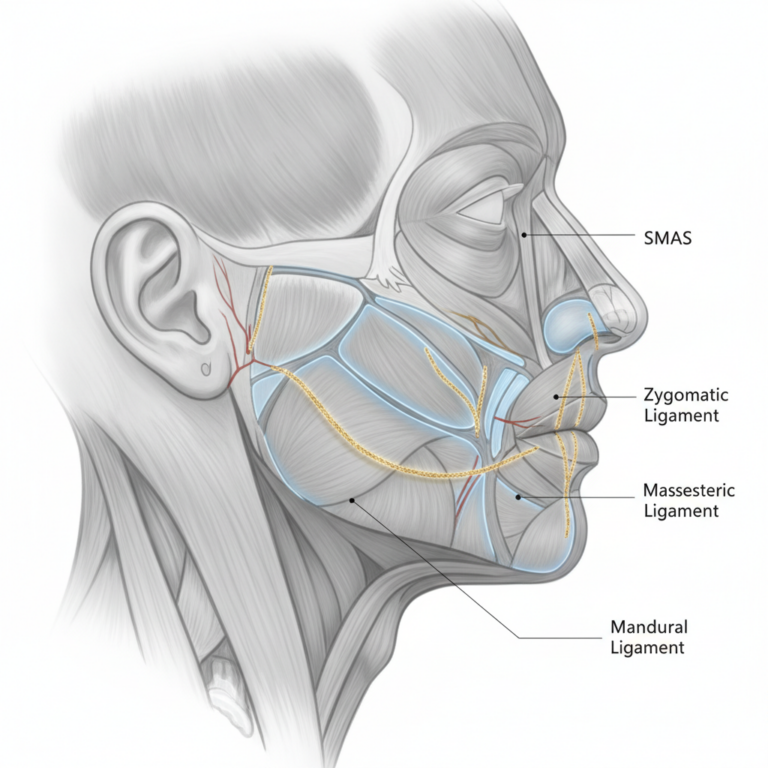
One of the most important components of a full facelift is addressing the SMAS (Superficial Musculo-Aponeurotic System). This deeper muscular layer supports facial structure and descends with age.
In a full facelift, the surgeon lifts and repositions the SMAS to restore cheek volume, soften deep folds, and redefine the jawline.
Techniques may include:
- SMASplication (folding and tightening)
- SMASectomy (removing a portion and tightening)
- Deep plane elevation (lifting deeper layers as one unit)
The specific method depends on the patient’s anatomy and desired outcome.
3. Redraping The Skin
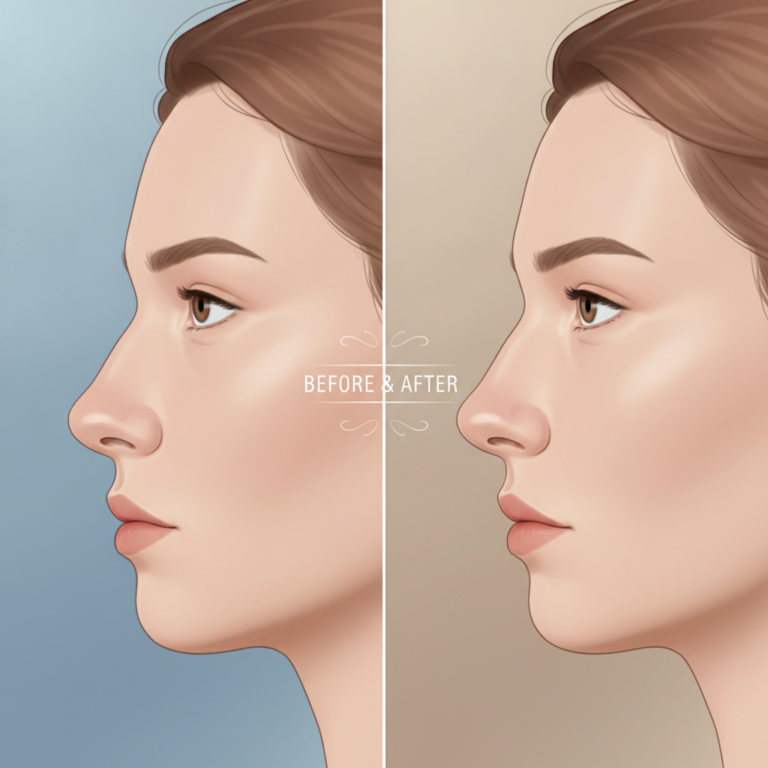
Once deeper tissues are repositioned, the skin is gently redraped over the new contour. Importantly, the skin is not pulled tightly. Excess skin is conservatively removed to avoid tension and prevent an unnatural “pulled” appearance.
Modern facelift philosophy emphasizes lifting structure rather than tightening skin alone, which leads to more natural results.
4. Neck Contouring
In most cases, a full facelift includes some degree of neck rejuvenation. This may involve:
- Tightening neck muscles (platysmaplasty)
- Removing excess fat under the chin
- Reducing visible neck bands
- Redefining the cervicomental angle (the angle between the chin and neck)
Addressing the neck ensures a harmonious transition between the jawline and collarbone.
5. Fat Repositioning Or Volume Restoration
Aging is not only about sagging, it also involves volume loss. A full facelift may include:
- Fat grafting
- Fat repositioning
- Subtle contour adjustments
These techniques restore youthful fullness in areas such as the cheeks and temples, enhancing overall facial balance.
What A Full Facelift Does NOT Include
While a full facelift is comprehensive, it does not automatically address every aging concern. For example:
- Forehead wrinkles may require a brow lift.
- Eyelid laxity may require blepharoplasty.
- Skin texture issues may benefit from resurfacing treatments.
These procedures can be combined strategically to create balanced, complete rejuvenation.
Who Is A Good Candidate For A Full Facelift?
Ideal candidates typically:
- Are between 45 and 75 years old
- Have moderate to advanced facial sagging
- Experience jowls and neck laxity
- Are in good general health
- Do not smoke
- Have realistic expectations
Age is less important than tissue quality and overall health. Many younger patients with strong genetics may not need a full facelift, while some individuals in their 40s may benefit from one if aging is more advanced.
How Long Does A Full Facelift Take?
A full facelift typically takes three to five hours, depending on complexity and whether additional procedures are performed. It may be done under general anesthesia or local anesthesia with sedation, depending on the surgeon’s recommendation and patient preference.
Most patients return home the same day, though some may stay overnight for observation.
What Is Recovery Like?
Recovery varies slightly between individuals but generally follows this timeline:
First Week:
Swelling and bruising are most noticeable. Patients rest, keep the head elevated, and limit activity.
Week Two:
Most patients feel comfortable returning to work and social settings. Swelling decreases significantly.
Weeks Three To Six:
Residual swelling resolves, and facial contours become more refined.
Three To Six Months:
Final results become fully apparent as tissues settle naturally.
Full recovery is gradual, but most patients feel socially presentable within two weeks.
How Long Do Full Facelift Results Last?
A full facelift can produce results that last 10–15 years or more, depending on genetics, lifestyle, and skin care. While surgery cannot stop the aging process, it effectively “resets the clock” by repositioning facial structures to a more youthful state.
Maintaining results involves:
- Sun protection
- Healthy lifestyle habits
- Consistent skincare
- Occasional nonsurgical maintenance treatments
Why Technique Matters
The success of a full facelift depends heavily on surgical expertise. Advanced techniques, such as deep plane or preservation facelifts, provide more natural movement and longer-lasting results compared to older skin-tightening methods.
An experienced surgeon carefully analyzes:
- Facial proportions
- Skin elasticity
- Bone structure
- Volume distribution
- Individual aesthetic goals
The result should enhance, not alter, your natural features.
What A Full Facelift Truly Involves
A full facelift is a comprehensive surgical procedure designed to address sagging cheeks, jowls, and neck laxity by lifting deeper facial structures and removing excess skin. It is not simply about tightening the skin. It is about restoring structure, proportion, and youthful contour.
When performed by a qualified facial plastic surgeon, a full facelift provides natural, long-lasting rejuvenation with predictable recovery and refined results. If you are considering facial rejuvenation, consultation with a board-certified surgeon is the best way to determine whether a full facelift is appropriate for your anatomy and goals.