
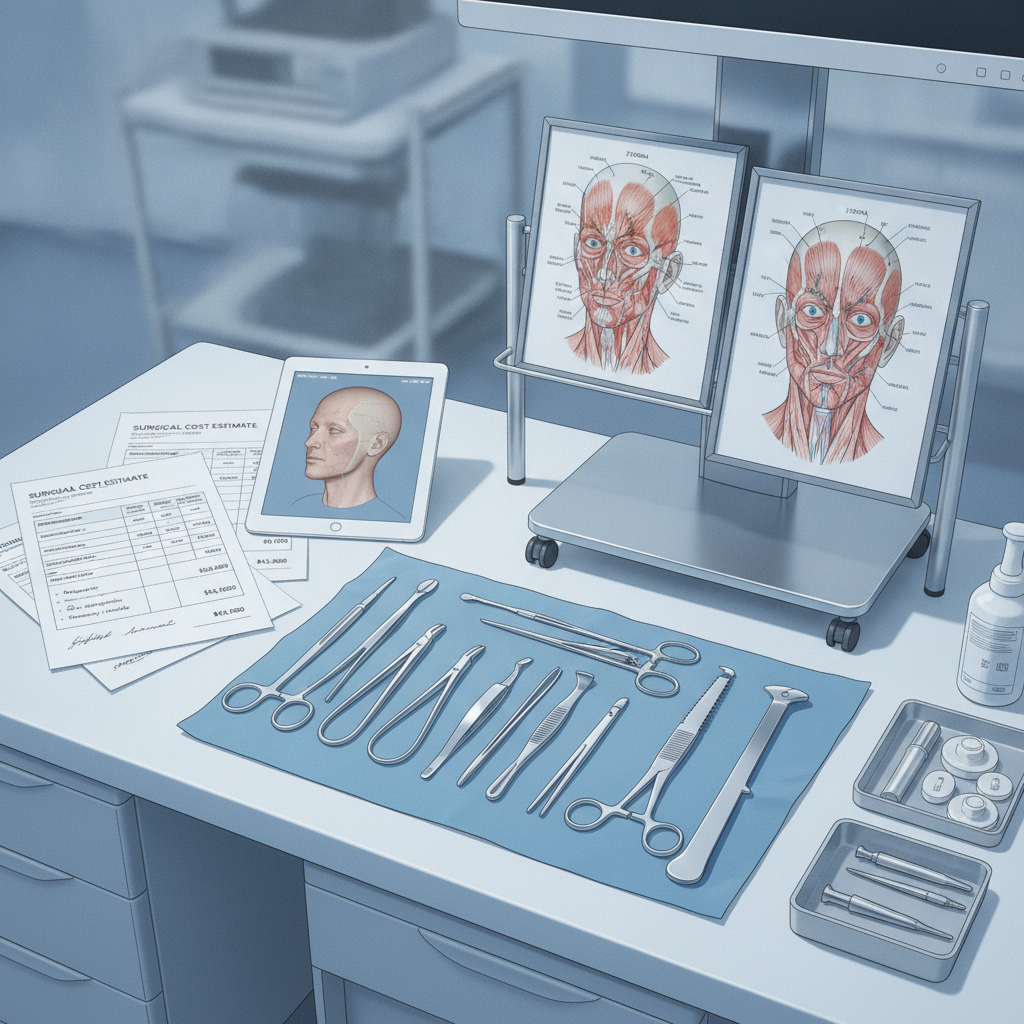
A facelift can cost roughly $5,600 to $52,000 nationally (with some Instagram famous surgeons charging over $150,000 for a deep plane facelift!) with an average total cost around $20,000 based on patient-reported data. That unusually wide range is real: “facelift” can describe dramatically different operations, surgeons, anesthesia plans, and combinations of procedures.
That is why comparing facelift prices based on a number alone can be misleading. One surgeon may quote a limited lower-face procedure, while another recommends comprehensive surgery addressing the cheeks, jawline, and neck. Those aren’t equivalent operations, even if both are described as a facelift.
Understanding what goes into the price can help you compare options more intelligently and recognize when a surprisingly inexpensive quote may not include everything you think it does.
1. How Extensive Is Your Facelift?
The first factor is simply how much surgery you need.
Imagine two patients. Patient A is in her mid-40s with early jowling and good neck definition. She may need a relatively limited procedure focused primarily on the lower face.
Patient B is in her 60s with descended cheeks, prominent jowls, deep facial folds, and significant neck laxity. Achieving a balanced result may require extensive repositioning of deeper facial structures along with neck rejuvenation.
Those procedures require different amounts of surgical work, so they should not cost the same. This is also why advertised facelift prices can be confusing. A low starting price may represent a much smaller operation than the procedure you actually need.
2. How Long Will the Surgery Take?
Operating time directly influences cost.
A relatively limited facelift may take only a few hours, while a complex face and neck procedure or revision can take considerably longer. Surgical facilities and anesthesia providers commonly charge based partly on time, so an additional hour or two can meaningfully affect the final bill.
Consider a patient requiring only modest correction around the jawline versus someone undergoing extensive deep-plane dissection, neck work, and fat repositioning. Even before considering the surgeon’s fee, the second patient may accumulate substantially greater operating-room and anesthesia costs simply because the surgery takes longer.
In cosmetic surgery, time and complexity frequently travel together.
3. What Anesthesia and Surgical Facility Are Being Used?
The surgeon’s fee is only one part of facelift pricing.
The American Society of Plastic Surgeons reports an average fee for a facelift surgeon of $11,395, but notes that this figure does not include anesthesia, operating-room facilities, or other related expenses.
For example, one patient may have an appropriate procedure performed under local anesthesia with sedation in an accredited office-based surgical setting. Another may require several hours of general anesthesia in a surgical facility with an anesthesia professional.
The second arrangement naturally introduces additional costs.
When reviewing a quote, ask whether it includes:
- Surgeon fees
- Anesthesia
- Operating-room or facility fees
- Surgical supplies
- Preoperative testing
- Prescriptions
- Follow-up appointments
Don’t assume a number labeled “facelift cost” includes all of them.
4. Are the Neck and Midface Included?
This is one of the biggest reasons facelift quotes can look dramatically different.
There is no universal definition of exactly what every surgeon includes when using the word facelift. Some practices include substantial neck correction within their standard procedure, while others charge for it separately. Procedures addressing the eyes, brows, skin, or volume are generally additional.
Consider someone with jowls and a poorly defined neck. A quote for lifting only the lower face may initially look attractive. But if achieving the patient’s desired result requires a neck lift as well, the real treatment cost could be considerably higher.
The same applies to the midface. If descended cheeks and deep nasolabial folds are important concerns, a limited lower-face procedure may not provide the correction the patient expects.
Instead of asking only, “How much is your facelift?”, ask: “Exactly which anatomical areas does this quote treat?”
That question makes comparing two estimates far easier.
5. How Experienced Is the Surgeon and What Is Their Revision Rate?
Surgeon experience can significantly influence price. The American Society of Plastic Surgeons specifically identifies surgeon experience as one factor affecting facelift fees.
For example, a surgeon who occasionally performs facelifts as part of a broad cosmetic practice may charge differently from a surgeon whose practice has extensive experience with complex facial rejuvenation and advanced facelift techniques.
But price alone doesn’t establish skill.
Patients should examine board certification, training, before-and-after photographs, experience with their specific procedure, complication management, and revision policies.
They should also ask a question that doesn’t receive nearly enough attention: How often do your facelift patients require revision surgery?
A $15,000 operation that ultimately requires another major procedure may prove considerably more expensive than choosing the appropriate operation and surgeon initially.
6. Where Are You Having Surgery?
Geography matters.
Operating a cosmetic surgery practice in Manhattan, Beverly Hills, or another high-cost market is different from operating one in a smaller city. Real estate, staffing, operating-room expenses, insurance, and local demand all influence pricing.
Location can significantly affect both surgeon and facility fees, with markets such as New York City, Los Angeles, Miami, and the Bay Area generally commanding higher prices.
For example, two similarly experienced surgeons could perform comparable operations but charge different amounts because one pays substantially more for operating-room space and staff.
Geography, therefore, matters, but it shouldn’t be evaluated independently from experience and what’s included in the procedure.
What Does a Low Facelift Quote Usually Leave Out?
A low quote isn’t automatically a red flag. A patient may simply need less extensive surgery.
The problem comes when patients compare an incomplete quote with an all-inclusive quote.
A particularly attractive advertised price may represent only the surgeon’s fee. The final invoice could additionally include:
- Anesthesia
- Operating-room fees
- Neck lift surgery
- Additional surgical time
- Preoperative testing
- Medications
- Recovery supplies
- Follow-up care
We specifically recommend requesting a written, all-in estimate that identifies surgeon, facility, anesthesia, and follow-up costs, along with asking whether medications, testing, and recovery supplies require additional budgeting.
Suppose Practice A quotes $16,000 and Practice B quotes $20,000. If Practice A later adds $2,500 for the facility, $1,500 for anesthesia, and additional fees for necessary neck work, it was never truly the less expensive option.
Ask for the total anticipated cost, not just the headline number.
The Cost Patients Rarely Consider: Revision Facelift Surgery
There is another number worth considering before choosing a surgeon: What could it cost to do the surgery twice?
Revision facelift surgery can be more complicated than primary surgery because the surgeon may be working through scar tissue and altered anatomy from the previous operation. This can require additional time and specialized expertise.
The financial difference can be substantial. RealSelf currently reports an average patient-reported revision facelift cost of approximately $36,600, with an exceptionally broad reported range of roughly $5,100 to $200,000.
That doesn’t mean paying more for your first facelift guarantees you won’t need a revision. No ethical surgeon can promise that.
It does mean that choosing a surgeon primarily because their initial quote is several thousand dollars cheaper may represent a false economy.
Before surgery, ask how the practice handles revisions. Does the surgeon charge another surgeon’s fee? Are facility and anesthesia costs still the patient’s responsibility? What happens if a revision is desired several years later rather than during the initial healing period?
Those answers deserve consideration alongside the original quote.
How to Compare Two Facelift Quotes
If you’re comparing surgeons, don’t simply put the two totals next to each other. Make sure you’re actually comparing the same operation.
Use this short checklist:
- Procedure: Are both surgeons recommending the same type and extent of facelift?
- Areas treated: Are the midface, jawline, and neck included?
- Surgeon’s fee: Is it clearly identified?
- Anesthesia: What type will be used, who administers it, and is it included?
- Facility: Are operating-room and surgical facility costs included?
- Additional procedures: Is anything being quoted separately?
- Aftercare: Are routine follow-ups included?
- Revision policy: What would you be responsible for financially if another procedure became necessary?
- Experience: How much experience does the surgeon have performing the specific facelift technique you’re considering?
The widest national facelift estimates span tens of thousands of dollars because patients aren’t all buying the same operation.
Ultimately, an online average can provide context, but it cannot tell you what your facelift should cost. Your anatomy, degree of facial aging, desired outcome, surgical plan, and anesthesia requirements all matter.
Scheduling a consultation is the best way to receive an accurate number. At Shah Aesthetic Surgery, Dr. Manish Shah takes the time to understand each patient’s concerns, explain the recommended surgical approach, and develop an individualized plan. That gives you the opportunity to understand not only what your facelift will cost, but exactly what you’re paying for.