
You’ve studied your profile in a dozen photos. You wonder if a narrower bridge or a sharper tip would still look like you. Maybe a surgeon once showed you a portfolio full of noses that looked nothing like your heritage. You left that consult more anxious than when you walked in. You want a change, not a different face.
That worry is common. People from African, Asian, Middle Eastern, Hispanic, and mixed-heritage backgrounds feel it often. You are right to ask if a surgeon understands your nasal bridge, your tissue, and your anatomy before any cutting begins.
Ethnic rhinoplasty is built around that exact question. It changes more than shape. It changes the tools, the grafting plan, and how long you wait before judging results.
Quick answer: Ethnic-focused rhinoplasty is a surgical plan built around non-Caucasian anatomy: thicker skin, weaker cartilage, and wider nasal bridges. Surgeons often use ultrasonic (piezo) tools to reshape the nose while preserving features tied to a patient’s heritage. It differs from standard rhinoplasty in tool choice, grafting needs, and recovery pattern, not just aesthetic goals.
What’s inside
- What Actually Makes Rhinoplasty Different for Ethnic and Mixed-Heritage Anatomy?
- How Does Ultrasonic (Piezo) Technique Change Surgical Decisions?
- What Happens During Surgery and How Long Is Recovery?
- Who’s a Good Candidate and How Do You Vet a Surgeon?
What Actually Makes Rhinoplasty Different for Ethnic and Mixed-Heritage Anatomy?
Ethnic-focused nasal surgery adapts standard techniques to fit thicker tissue, weaker cartilage support, and looks tied to heritage, not one generic template. It isn’t a separate procedure. It’s a different surgical plan built on your own anatomy.
Surgeons who treat many types of ethnic anatomy know a wide, flat bridge and a narrow, drooping tip need different approaches. Someone with strong cheekbones and a fuller lower face needs different proportions than someone with a delicate jaw. Facial harmony, not one ideal nose, is the real goal.
Skin Thickness and Why It Changes the Surgical Plan
Surgeons sort nasal skin into three bands, per AEDIT. These are thin (under 1.5mm), medium (1.5 to 2mm), and thick (over 2mm). Thicker tissue is common in many African, Middle Eastern, and some Asian noses. It tends to hide fine tip definition, even after careful cartilage work underneath.
Cartilage Support: The Hidden Variable Surgeons Test For
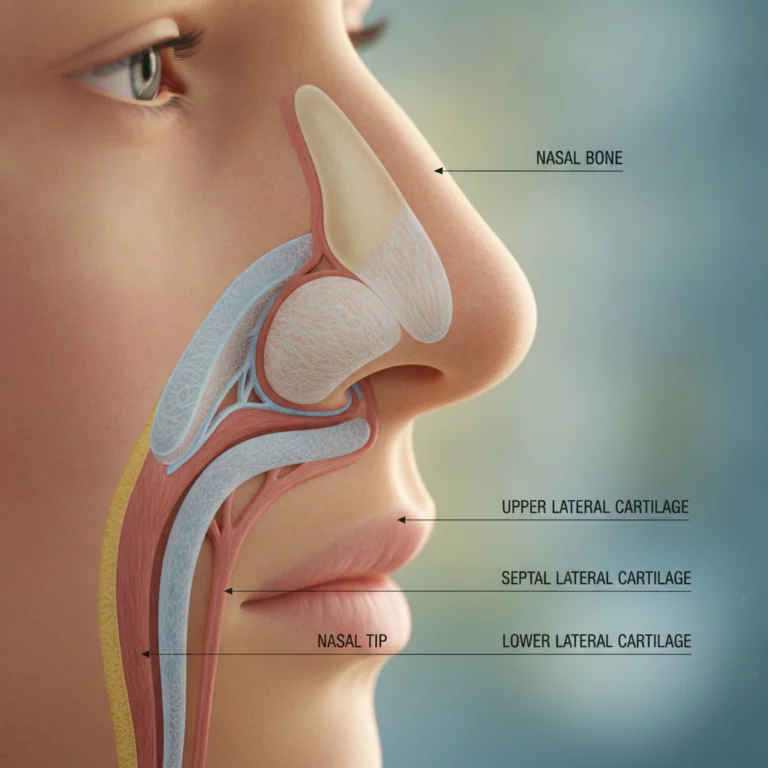
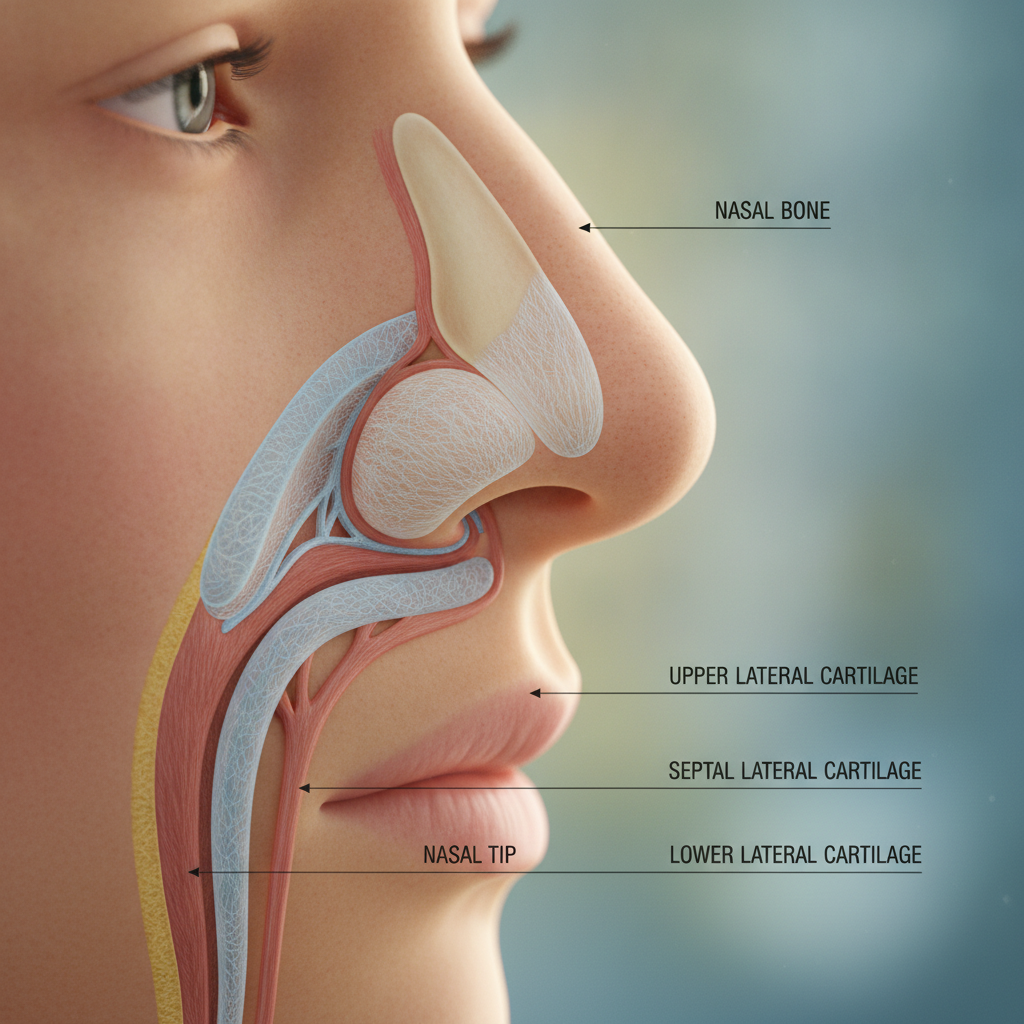
Weaker lower lateral cartilage shows up often in ethnic noses. This limits how much tip projection surgery can safely achieve. A 2019 review of rhinoplasty techniques for non-Caucasian patients found that many patients today are of mixed heritage. Technique should follow the anatomy in front of the surgeon, not a fixed label. That guidance comes from a 2019 review indexed on PubMed.
Nasal Bridge and Tip Differences Across Middle Eastern, African, Asian, and Hispanic Anatomy
Many patients from Middle Eastern backgrounds carry a prominent dorsal hump with strong cartilage. Many African and some Asian noses present a flatter bridge that needs augmentation, not reduction. A facial plastic surgeon at Houston Methodist explains it simply in a public patient video: understanding a patient’s culture and personal sense of beauty is part of planning this surgery.
Pro tip: If tip tissue measures over 2.0mm thick, ask your surgeon about structural grafting instead of aggressive tissue removal. Cutting too much thick tissue rarely gives the refinement you want.
Picture a patient with thick, oily tip tissue. She worries her new tip will look just like the old one. A surgeon who understands this anatomy explains, before surgery, that small cartilage grafts build structure the eye can see, even when the tissue itself stays thick.
How Does Ultrasonic (Piezo) Technique Change Surgical Decisions?
Piezo instruments cut bone selectively, using ultrasonic vibration. They spare soft tissue around the cut. This gives surgeons finer control over dorsal hump reduction than older tools allow. That precision matters more on the denser, shorter nasal bones common in many ethnic noses than on a typical thin bridge.
Piezo Instruments vs Traditional Osteotomes, Explained
An osteotome is a small chisel-like tool. Surgeons use it to break and reposition nasal bone during rhinoplasty surgery. Ultrasonic (piezo) rhinoplasty uses a vibrating tip instead. It cuts bone but generally leaves skin, blood vessels, and other soft tissue undisturbed.
When a Surgeon Reaches for Piezo on Ethnic Anatomy
A patient with a wide, dense nasal bridge and thick tissue overlying it is a common candidate for piezo technique. Dr. Manish Shah, a board-certified plastic surgeon, uses ultrasonic piezo tools for this reason. Denser bone, often seen in these cases, responds well to controlled ultrasonic reshaping rather than a broad traditional fracture. The goal is a natural-looking result tailored to your own anatomy, not a narrower nose that reads as someone else’s face.
Pro tip: Ask whether your surgeon limits dorsal bridge reduction to roughly 2 to 3mm on naturally high or strong bridges. Taking more than that risks a scooped, over-corrected profile that no longer matches your face.
Bruising and Swelling: What Patients Actually Report
Patients generally report less bruising after ultrasonic bone work than after traditional rasps and chisels. Less soft tissue trauma explains why. This controlled approach also supports nasal tip refinement without disturbing the cartilage framework needed for lasting results.
What Happens During Surgery and How Long Is Recovery?
A typical procedure moves through consultation and anatomy mapping, then an open or closed surgical approach, then several weeks of recovery. Bruising varies by tool and technique. Demand for rhinoplasty surgery has stayed strong. It remains the top cosmetic procedure for patients under 34. The ASPS reported 352,555 procedures in 2020 and more than 365,000 in 2021.
Consultation and Anatomy Mapping Before Surgery
Your first visit should include a real conversation about your goals, not just a generic list of options. A board-certified surgeon typically photographs and measures facial proportions, bridge width, and tip support before recommending a plan made for you.
Surgery Day: Open vs Closed Technique Choices
An open approach uses a small incision across the columella, the strip of tissue between the nostrils. This gives the surgeon a direct view of the cartilage framework. A closed approach hides incisions inside the nostrils. Either way, this rhinoplasty surgery should reshape the nose while keeping the width and character that read as authentically yours.
Healing Timeline and What It Typically Costs
Early swelling starts easing within the first few weeks. Final tip definition, especially with thicker tissue, generally takes 12 to 18 months to fully settle.
|
Setting |
Typical Cost Range |
What’s Included |
|---|---|---|
|
U.S. board-certified surgeon |
$8,000 to $15,000 |
Surgeon fee, facility, anesthesia |
|
Turkey medical-tourism package |
$2,500 to $4,500 |
Surgery, hotel stay, transfers bundled |
These figures are planning estimates based on commonly reported market ranges, not a quote for any specific practice.
Patients considering surgery abroad should plan for at least a year of structured follow-up. This can be with the original surgeon or a local specialist. Results from this type of surgery change slowly, so early judgments can mislead you.
Many surgeons also suggest budgeting an extra 10 to 15 percent for possible revision rhinoplasty. That is a second procedure that corrects or refines an earlier nose job.
Pro tip: Judge your final result at the 12 to 18 month mark, not at 3 months. Thick tissue takes longer to reveal true tip definition, and rushing that judgment leads to unnecessary revision consults.
Who’s a Good Candidate and How Do You Vet a Surgeon?
Good candidates want proportional refinement that matches their aesthetic goals, without losing their sense of identity. They should confirm their surgeon has documented, varied experience, not just one type of nose in a portfolio. If you’re wondering whether you’re a good candidate for ethnic-focused rhinoplasty, start with the signs below.
Signs You’re a Strong Candidate for This Type of Rhinoplasty
- ✓ You want breathing improvement along with cosmetic refinement
- ✓ You can point to specific traits, like a wide base or drooping tip, you want addressed
- ✓ You are not trying to look like a different ethnicity or a specific celebrity
- ✓ You understand recovery involves weeks of swelling before you see the final outcome
- ✓ You are in good general health and have realistic expectations for a single procedure
Questions to Ask About Preserving Your Nasal Identity
Ask directly how the surgeon plans to keep your nasal bridge and tip in proportion with the rest of your profile. Some surgeons note that ethnicity alone doesn’t fully describe anyone’s nasal anatomy. Tissue thickness, bone, and cartilage vary widely, even within the same background. Academic programs frame this work the same way. One example is the ethnic rhinoplasty program at UT Southwestern Medical Center, which stresses tailored planning over a single ideal nose. A good answer references your actual measurements, not a generic category.
Consultation Red Flags Worth Walking Away From
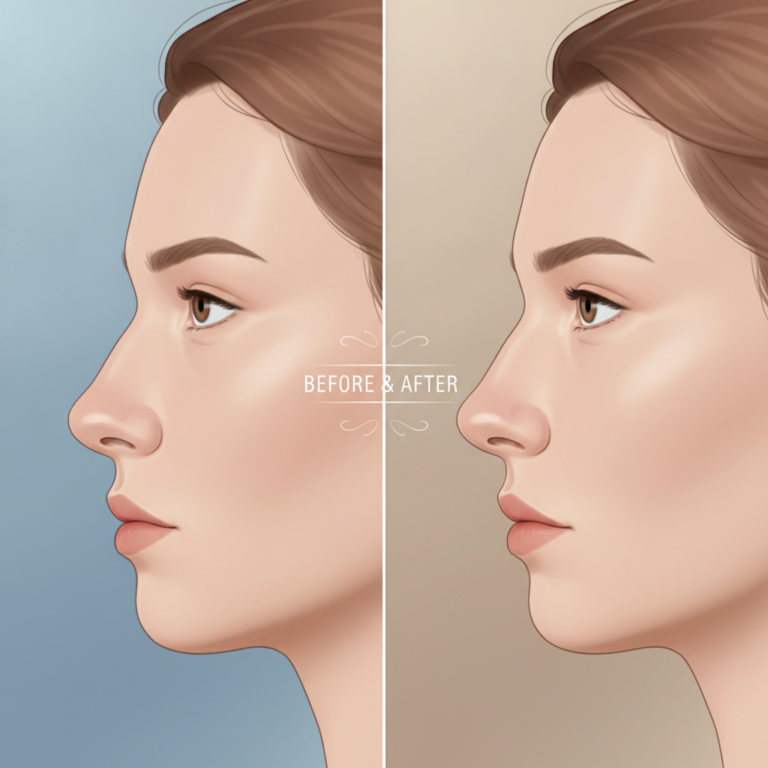
If a surgeon’s before-and-after gallery shows only one type of look, that’s worth noticing. A practice where every result looks Westernized, no matter the person’s starting traits, signals the plan may not be personalized enough for you.
Pro tip: Look for a before-and-after portfolio spanning at least three different ethnic backgrounds. That range is a reasonable proxy for real experience with varied tissue thickness and cartilage strength, not just one nasal template repeated on different people.
A Quick Note on Rules
Board certification rules differ by state and country. Confirm your surgeon’s credentials through your state or national medical board before booking. Marketing terms like “ethnic-focused rhinoplasty” are not a formal medical specialty. They describe a planning approach, not a licensing category.
Disclaimer
This article is for general education and is not medical advice. It was reviewed for accuracy by a board-certified plastic surgeon experienced in facial procedures. Individual results vary based on anatomy, tissue type, and healing. Always consult a licensed, board-certified plastic surgeon for a personalized treatment plan before making any surgical decision.
Decision FAQs
Is this type of rhinoplasty more expensive than a standard nose job? Not inherently. U.S. pricing typically runs $8,000 to $15,000 either way. Complex cases with grafting may add 10 to 15 percent for revision contingency.
How do I know if a surgeon understands my specific ethnic anatomy? Check for a before-and-after portfolio covering at least three different ethnic backgrounds. Also listen for specific talk about your tissue thickness and cartilage strength during consultation.
Will this kind of surgery change my ethnic identity? It shouldn’t. The goal is proportional improvement: refining a bridge or tip while keeping the natural width and character that read as your own, not a generic nose.
What ethnicity most commonly seeks rhinoplasty in the U.S.? National data doesn’t break rhinoplasty demand down by ethnicity. The ASPS reports it as the top surgery for patients under 34, with 352,555 procedures in 2020 alone.
Technical/Process FAQs
What is ethnic rhinoplasty, exactly? It’s a surgical plan built around non-Caucasian anatomy. Tissue thickness is sorted into under 1.5mm, 1.5 to 2mm, and over 2mm bands, and each band changes the surgical approach.
How long does bruising last with piezo instruments vs traditional osteotomes? People generally see less bruising and faster fading after piezo bone work than with traditional rasps and chisels. Soft tissue trauma is reduced.
What happens to a rhinoplasty result 20 years later? Surgeons generally consider results stable by the 12 to 18 month mark. Structural cartilage grafting is designed to hold that shape for decades, not just the first year.
Can a revision rhinoplasty fix a nose that lost its ethnic features? Often, yes. Revision rhinoplasty can reintroduce lost width or projection using cartilage grafts from the septum, ear, or rib. Surgeons typically apply the same one-year evaluation window used on first-time results before planning a second procedure.
If you’re gathering ideas before your consultation, bring photos of noses you admire from your own family or heritage, not just generic before-and-afters. It gives your surgeon a clearer starting point for a nose that still looks like you.